«Мулине» скручивается из шести или двенадцати хлопчатобумажных нитей. Для плетения кружева требуются более тонкие нити, которые можно получить путём расщепления исходной пряжи.
[wp_ad_camp_1]
Расплести рулон пасмо оказывается не так просто, как это может показаться на первый взгляд. Немедленно выясняется, что оператору неплохо бы иметь третью и четвёртую руку, т.е. без помощника не обойтись.
Задача расщепления формулируется так:
- вытянуть из пряжи, намотанной на клубок-отвес, три потока нитей, поддерживая одинаковые силы натяжения каждой из них, и уложить расщеплённые нити на раздельные катушки;
- обеспечить приостановку расщепления на время сматывания очередной порции пряжи с клубка и её раскручивания под действием силы тяжести отвеса;
- расщепление выполнять с минимальным количеством прикасаний пальцами к нитям (особенно это важно при расщеплении белой пряжи).
Проблема регулирования натяжения нити возникает потому, что при расщеплении скрученной пряжи «набегает» значительное расхождение в длине нитей, и в результате самая длинная из них провисает с нулевым натяжением.
Возникает аварийная ситуация. Оператору приходится приостанавливать работу и устранять провисание, доматывая накопленный «излишек» на катушку «аварийного» канала. И при этом, конечно, не избежать лишних прикосновений пальцами к нити.
Для устранения провисания нити авторы данной книги предложили принципиальную схему расщепления на основе двух гравитационных компенсаторов (увы, опять не обойтись без научных терминов). Принцип действия показан на рис.3.5.
Клубок-отвес 1 массой порядка 100-150 граммов свободно висит на выпущенном отрезке пряжи длиной L = (1 … 1.5) м и вращается, раскручивая пряжу (она показана пунктиром). От направляющей гребёнки 2 пряжа расходится на три направления. Между гребёнками 2 и 3 каждая нить проходит под роликом 4, опускаемым силой тяжести F1 внешнего груза (сам ролик лёгкий).
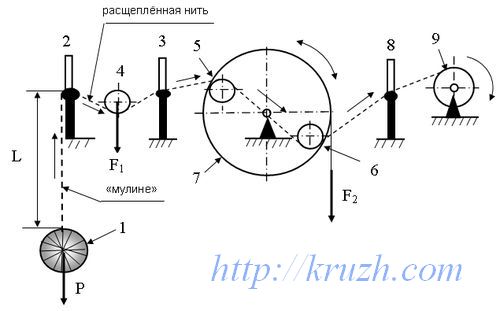
Рис.3.5. Принцип компенсации провисания нити
После гребёнки 3 нить проходит над роликом 5, а затем под роликом 6. Ролики 5 и 6 установлены на диске 7, который под действием нагрузки F2 стремится повернуться по часовой стрелке.
От ролика 6 нить поступает через направляющую гребёнку 8 на катушку-приёмник 9 (всего их три), установленную на главном валу. Вал приводится в движение рукой оператора (кружевницы). При нормальном натяжении расщеплённой нити наступает баланс всех сил тяжести и трения. В этом случае ролик 4 занимает самое верхнее положение (на уровне опорных поверхностей гребёнок 2 и 3), а диск поворачивается так, что центры роликов 5 и 6 располагаются на горизонтальной линии. Как только одна из трёх нитей оказывается длиннее других, соотношение сил изменяется, и в «аварийном» канале устройства баланс наступает при другом расположении роликов.
Возникшая «слабина» нити мгновенно компенсируется за счёт того, что ролик 4 «проваливается» до определённой глубины, а диск 7 поворачивается так, что ролик 6 оказывается ниже ролика 5.
Путь нити от клубка до приёмной катушки в этом канале автоматически удлиняется, а сила натяжения всех трёх нитей оказывается одинаковой.
Когда текущий отрезок пряжи длиной L расплетён, вращение дисков и приёмных катушек необходимо затормозить, «отпустить» с клубка новый отрезок и дать ему время на раскрутку пряжи, а затем освободить подвижные части от торможения и продолжать расщепление. За время эксплуатации приспособления практически не было аварийных «остановок» механизма, а все паузы были только необходимыми для перехода к новому отрезку исходной пряжи, «отпущенному» с клубка. Операция расщепления пасмо «мулине» длиной 20 м на три сдвоенных нити длится не более 10 минут. Расщепление льняной нити фирмы «Камтекс» (Камский текстиль) длиной 30 м, отмотанной со стандартного мотка (100 г, около 360 м), занимает 15 минут.
Заметим, что применение двух компенсаторов разных конструкций не является обязательным. В каждом из них заложен один и тот же принцип действия, поэтому вполне можно было бы заменить дисковый компенсатор (5, 6, 7) более простым «проваливающимся» роликом, аналогичным ролику 4. Но так как «расплеталка» уже изготовлена и используется по назначению, авторы решили сохранить механизм в первоначальном виде, а заодно и показать здесь два варианта компенсации.
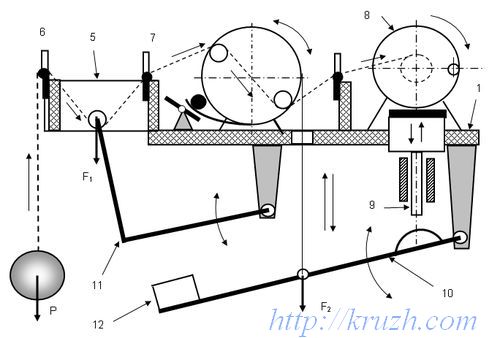
Принципиальная схема механизма расщепления, показанная на рис.3.5, допускает множество способов построения кинематической схемы приспособления. Покажем один из них на примере действующего образца «расплеталки» в двух проекциях – горизонтальной (рис.3.6) и вертикальной (рис.3.7).
На платформе 1 установлены три функциональные узла:
- блок 2 с тремя катушками для приёма расплетённых ниток;
- блок 3 с направляющими для укладки витков ниток на катушках;
- блок 4, содержащий три дисковых компенсатора с общим механизмом торможения дисков.
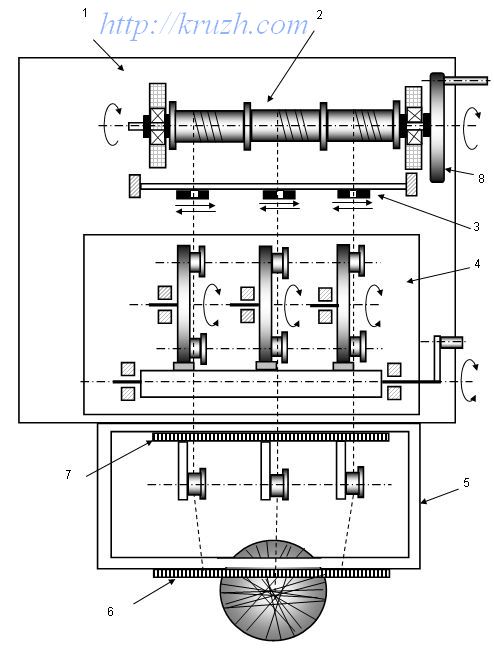
К платформе 1 прикреплена рамка 5, несущая две неподвижные гребёнки 6 и 7.
Катушки-приёмники установлены на общем валу, концы которого закреплены на стойках с шариковыми подшипниками. На правом конце вала установлен маховик 8 с рукояткой вращения. Тормозной механизм маховика выполнен в виде толкателя 9, в верхней части которого закреплена полоска пористой резины. В процессе расщепления толкатель под действием собственного веса занимает крайнее нижнее положение, а при временной остановке работы он переводится в крайнее верхнее положение и прижимается к ободу маховика, препятствуя его вращению.
Тормозной механизм дискового компенсатора содержит планку, закреплённую концами на шарнирах. На правом конце оси вращения планки установлена ручка управления. Под каждым диском компенсатора размещена гибкая пластина. На стороне пластины, обращённой к диску, имеется резиновая прокладка. В режиме торможения планка поворачивается с помощью ручки управления и фиксируется в положении, при котором пластины с резиной прижимаются к дискам. При переходе к операции расщепления оператор снимает фиксацию планки, и она под действием пружины возвращается в исходное состояние, освобождая диски.
Механизмы автоматического регулирования натяжения расплетённых нитей содержат рычаги 10 и 11. Рычаг 10 правым концом связан шарниром с платформой 1 и подвешен гибкой нитью к диску компенсатора. Нить проложена по периферийному желобку диска и закреплена на диске в точке, близкой к первому ролику. Сила F2 натяжения нити складывается из двух составляющих – собственного веса рычага 10 и дополнительного груза 12, закреплённого на левом конце рычага. Масса груза 12 подбирается при настройке приспособления в зависимости от длины рычага 10 (обычно в качестве груза достаточно установить гайку М10).
Рычаг 11 связан правым концом шарнирно с платформой 1. На его левом конце установлен первый ролик, натягивающий расплетённую нить между гребёнками 6 и 7. Сила F2 определяется массой рычага 11; дополнительный груз не требуется.
Диапазон вращения рычага 10 ограничен длиной нити подвеса к диску. Рычаг 11 следует связать с платформой 1 нерастяжимой нитью, задающей допустимую глубину «провала» ролика. Кроме того, рычаг 11 рекомендуется связать нерастяжимой нитью с рычагом 10. Дело в том, что первым реагирует на ослабление нити дисковый компенсатор. Когда он исчерпает собственные возможности удлинения траектории расплетенной нити, он приведёт в движение рычаг 11 с помощью гибкой тяги.
На время «отпускания» очередного отрезка пряжи с шарового клубка рычаг 10 принудительно переводится оператором в горизонтальное положение и фиксируется в этом состоянии. При этом рычаг 10 подталкивает своим нагруженным левым концом рычаг 11, заставляя подняться и его. Кроме того, рычаг 10 поднимает шток (толкатель) механизма торможения махового колеса.
После выпуска с клубка нового отрезка пряжи оператор освобождает рычаг 10 от фиксации. При этом весь механизм автоматически приводится в рабочее состояние и расщепление пряжи продолжается.
Блок направляющих 3 не относится к числу обязательных, но его присутствие в кинематической схеме оказывается полезным для получения более равномерного распределения витков нити на катушках-приёмниках. Без этого блока витки расщеплённой нити укладываются на всех катушках бесформенным «бугром».
Чтобы не загромождать основную часть схемы, на рис.3.6 показан только исполнительный узел 3 устройства для укладки витков.
Для идеального распределения витков по поверхности приёмной катушки требуется механизм, обеспечивающий возвратно-поступательные движения одновременно трёх направляющих с постоянной линейной скоростью вдоль оси вращения катушки.
Такой механизм имеется в любой швейной машинке для намотки ниток на катушку. С его принципом действия можно всегда ознакомиться, однако повторить его в домашних условиях достаточно сложно. Поэтому приходится отказываться от оптимальной укладки витков и соглашаться на некое приближение к идеалу.
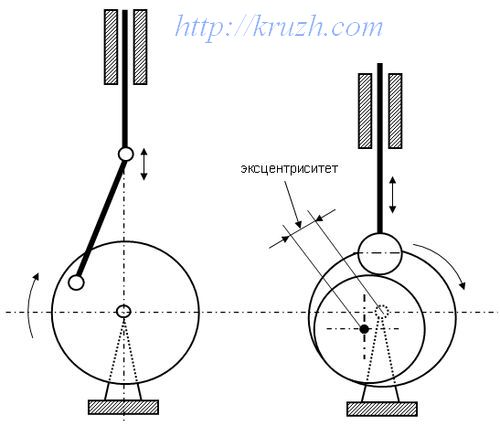
Конструктору-любителю в домашних условиях вполне по силам осуществить два механизма преобразования вращательного движения вала в поступательное движение направляющих:
- кривошипно-шатунный (рис.3.8),
- эксцентриковый (рис.3.9).
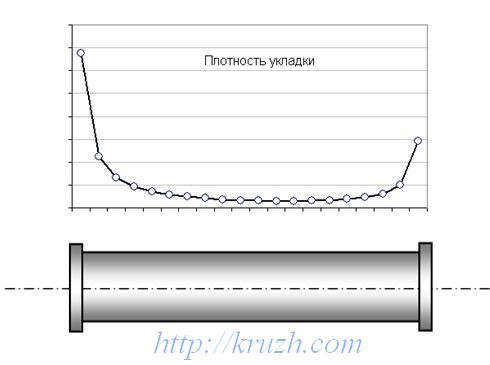
Устройство для укладки витков на приёмные катушки состоит из двух узлов – редуктора и исполнительного узла с направляющими для нитей. Оба механизма укладывают витки неравномерно по длине катушки (рис.3.10).
Плотность витков больше на концах, меньше в середине. В равных условиях неравномерность намотки в обоих случаях оказывается практически одинаковой. Однако кривошипный механизм сложнее в изготовлении и имеет принципиальный недостаток – у шатуна случаются торможения в двух «мёртвых точках», и его иногда приходится подталкивать.
Эксцентриковый механизм конструктивно проще и надёжнее в работе. Кроме того, эксцентриковый механизм можно дополнительно скорректировать с целью получения более равномерной укладки витков по всей длине катушки.
Назначение редуктора – обеспечить вращение эксцентрика с угловой скоростью в 30 – 40 раз ниже скорости вращения катушек.
Общеизвестны принципы понижения угловой скорости с помощью следующих механизмов:
- колёсные пары с ремённой передачей;
- фрикционные колёсные пары;
- зубчатые колёсные пары (цилиндрические и конические);
- червячные пары.
Редуктор для укладки витков отличается малой мощностью, поэтому его можно изготовить без специального оборудования и сложной оснастки, пользуясь готовыми деталями промышленного изготовления. В любительских условиях легко реализуются механизмы, в основном, трёх первых типов.
Ремённая передача относится к числу простейших в исполнении. Она неприхотлива и прощает все неточности изготовления. Если нет готовых шкивов (дисков), их можно вырезать их фанеры толщиной 10 мм и по периметру пропилить канавку круглым напильником.
В качестве ремня пригодны резиновые кольца круглого или квадратного сечения, а также плоские кольца.
Немного сложнее фрикционные пары. Одно из колёс может быть выполнено из твёрдого материала (металл, пластик, дерево). Для достижения «чистой» поверхности идеальной цилиндрической формы оно должно быть выполнено на токарном станке. Мастеру – любителю придётся подбирать готовое колесо. Второе колесо для получения хорошего сцепления пары должно иметь мягкую поверхность, которой обладает, например, резиновый обод или диск из гибкой пластмассы. Обрезиненные колёса имеются во многих детских игрушках и в конструкторских наборах. Идеально подходят упомянутые выше ролики для спортивных досок. Хорошее сцепление даёт фрикционная пара из двух колёс с мягким ободом.
Зубчатые пары можно заимствовать из разнообразных источников – детских конструкторских наборов, крупных часовых механизмов и даже из старых радиоприёмников, где они используются в устройствах для перемещения стрелки-указателя шкалы настройки.
Пример кинематической схемы редуктора в авторском исполнении показан на рис.3.11.
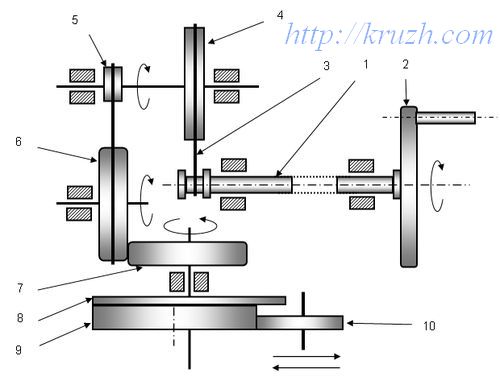
На главном валу 1 закреплены три приёмные катушки. На правом конце вала установлено маховое колесо 2 ручного привода «расплеталки». Левый конец вала 1 соединён резиновым ремнём 3 с колесом 4, сидящим на одной оси с первым колесом 5 второй ремённой пары.
Второе колесо 6 той же пары образует с колесом 7 фрикционную пару, предназначенную для выполнения двух функций:
- перевод вращения в вертикальную плоскость, параллельную оси вращения главного вала 1;
- вращение колеса 8, несущего эксцентрик 9, который обеспечивает возвратно-поступательное движение оси ролика 10.
Колесо 7 жёстко связано осью с диском 8, на котором закреплён эксцентрик 9. К поверхности эксцентрика 9 прижимается опорный ролик 10, ось вращения которого совершает возвратно-поступательные движения (качания) в плоскости вращения эксцентрика.
Скорость вращения маховика 1 понижается двумя ремёнными парами в 40 раз. Фрикционная пара выполнена из колёс одинакового диаметра. Итак, общая редукция составляет 1:40.
Преобразование равномерного вращения в возвратно-поступа-тельные движения поясняет кинематическая схема, представленная на рис.3.12. В процессе расщепления пряжи диск 8 вращается с постоянной угловой скоростью в одном и том же направлении. Опорный ролик 10 постоянно прижимается к эксцентрику 9 пружиной 11.
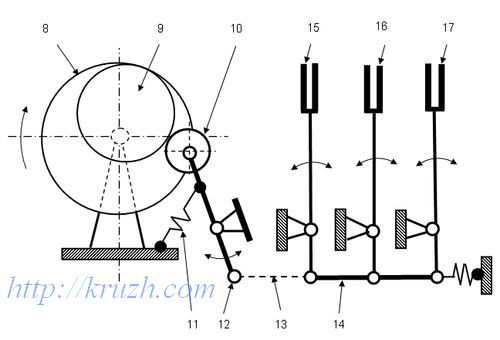
Рис.3.12. Кинематическая схема устройства для укладки витков расплетённых нитей на катушку хранения
Смещённый диск эксцентрика 9 заставляет ролик 10 качаться на рычаге 12. Рычаг 12 с помощью нерастяжимой нити 13 увлекает за собой тягу 14, которая водит рычаги сразу трёх направляющих 15, 16, 17. Нити, проходя через прорези элементов 15, 16 и 17, периоди-чески изменяют направление движения вдоль катушек. Профиль укладки витков точно повторяет форму, показанную на рис.3.10. Если проведена коррекция эксцентрика, витки укладываются равномерно.
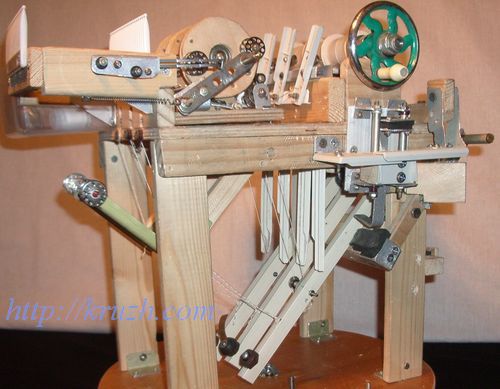
Общий вид устройства для расщепления пряжи представлен в двух ракурсах на фотографиях (рис.3.13 и рис.3.14).
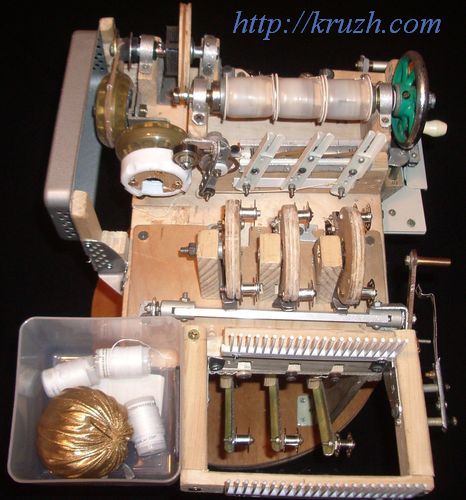
На рис.3.13 видны почти все основные узлы:
- главный вал с тремя катушками и маховиком;
- редуктор слева от главного вала;
- эксцентриковый механизм с тремя направляющими для укладки витков;
- блок из трёх дисковых компенсаторов с планкой торможения перед ними;
- рамка с двумя гребёнками;
- блок из трёх рычажных компенсаторов, наблюдаемых через рамку;
- коробка для хранения клубка (на фотографии видно, что в коробку положены три катушки с расщеплёнными нитями).
На рис.3.14 хорошо различимы узлы:
- блок торможения маховика;
- рычажные компенсаторы под гребёнками;
- рычаги, связанные нитями с дисковыми компенсаторами.